Last updated: February 2026
It's 11pm and you just got a notification on your phone: your front door was unlocked 3 hours ago, and you have no idea who did it. Could be your teenager. Could be someone else. That moment of panic is exactly why the question "are smart locks safe?" deserves a real, honest answer, not a sales pitch from a manufacturer's website.
Here's the short answer: yes, smart locks can be safe, but only when they're the right lock, correctly installed, on a door that's actually secure. A $250 smart lock bolted to a hollow-core door with a weak strike plate is not safer than a basic deadbolt. Context matters enormously.
We've installed and assessed hundreds of smart locks for homeowners across Stuart, Palm City, Jensen Beach, and Port St. Lucie. This is what we've learned from doing the actual work.
What Makes a Smart Lock Secure (or Not)
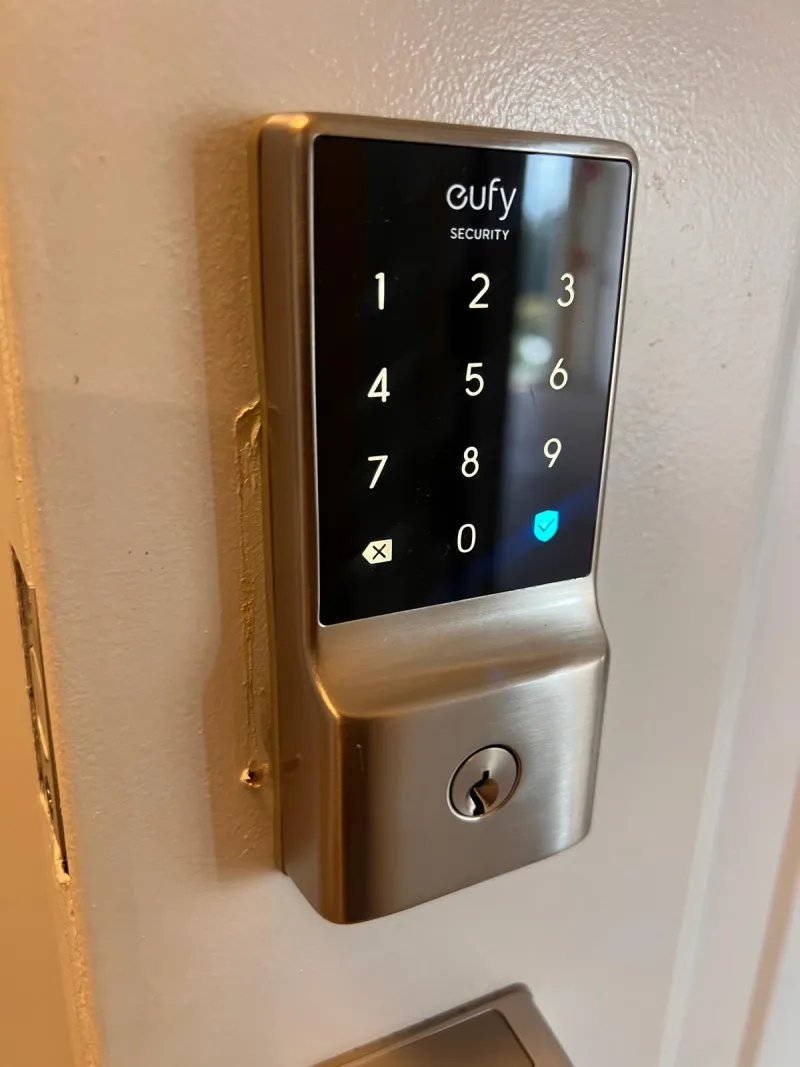
Not all smart locks are built the same. There's a massive difference between a $79 Wi-Fi lock from a big-box store and a Grade 1 ANSI/BHMA certified smart deadbolt from Schlage or Yale.
The ANSI/BHMA grading system is the standard you should care about. Grade 1 is the highest residential rating, tested to withstand 250,000 open/close cycles and significant physical force. Most cheap smart locks are Grade 3 at best. That's the first thing we check when a Stuart homeowner asks us to evaluate a lock they're considering.
On the digital side, look for 128-bit AES encryption, which is the same standard banks use. Locks using Z-Wave Plus or Zigbee protocols are generally more secure than basic Bluetooth-only models because they don't transmit over the same congested Wi-Fi band as your laptop and smart TV. Some higher-end locks also include anti-pick pins, anti-drill plates, and hardened steel bolts, just like traditional high-security locks do.
The physical hardware still has to do its job. If someone can kick your door in within 3 seconds because the strike plate is held on with half-inch screws, the smart lock is irrelevant.
Real Risks Stuart Homeowners Should Know About
Look, there are legitimate concerns with smart locks. Let's go through them honestly.
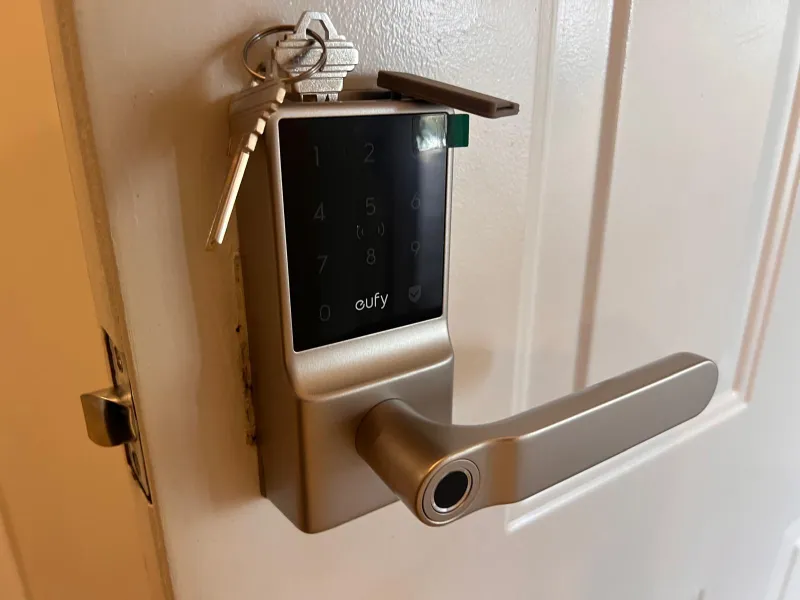
Wi-Fi and Bluetooth vulnerabilities. Poorly designed smart locks have been hacked in lab settings. This is real. However, consumer-grade attacks on residential smart locks in places like Stuart or Hobe Sound are extremely rare compared to someone just kicking a door or breaking a window. Criminals follow the path of least resistance, and signal jamming your Schlage Encode is a lot more work than just throwing a rock.
Power failures. Stuart gets hit with storms. When the power goes out, a Wi-Fi smart lock loses its remote access features. Most quality smart locks still operate via keypad or physical key backup during an outage. Always confirm your lock has a mechanical key override before you buy.
Software and firmware issues. A lock that doesn't get security updates is a vulnerability that grows over time. Stick with brands like Schlage, Yale, Kwikset Halo, and August that have a track record of pushing firmware updates. Avoid no-name brands with no support infrastructure.
Weak passwords and shared codes. This is the most common real-world problem we see. Homeowners set a code like 1234, share it with the house cleaner, the dog walker, and three family members, then never change it. Smart locks let you create unique access codes for each person and delete them instantly. Use that feature.
Smart Lock Installation by Stuart Locksmiths includes a full security audit of your door frame, strike plate, and lock hardware before we ever touch a new lock. That's how it should be done.
Smart Locks vs. Traditional Deadbolts: A Straight Comparison
A lot of homeowners in Tequesta and Jupiter ask us this directly: "Should I just stick with a regular deadbolt?" Fair question. Here's how they stack up.
| Feature | Traditional Deadbolt | Smart Lock (Grade 1) |
|---|---|---|
| Physical strength | High (Grade 1) | High (Grade 1) |
| Pick resistance | Good (high-security models) | Good (same cylinders) |
| Remote access | No | Yes |
| Access logs | No | Yes, timestamped |
| Guest codes | No | Yes, deletable |
| Power dependency | None | Batteries (2-year avg life) |
| Hacking risk | None | Low (reputable brands) |
| Cost (installed) | $120-$250 | $250-$550 |
The honest takeaway: a Grade 1 smart lock from a reputable brand is at least as physically secure as a standard deadbolt, with added features that genuinely improve day-to-day security management. For families renting out a property on Hutchinson Island, managing a short-term rental in Sewalls Point, or just tired of hiding spare keys under a rock, smart locks make a lot of practical sense.
If you want a traditional upgrade that pairs well with a smart lock, our Deadbolt Installation & Repair service covers reinforced strike plates, 3-inch security screws, and Grade 1 deadbolt hardware that gives any smart lock the physical backing it needs.
What to Do Before Installing a Smart Lock in Stuart
This is where most people skip steps and regret it later.
First, check your door. Exterior doors in Stuart homes, especially older homes near the St. Lucie River or in the Willoughby neighborhood, are often weathered, misaligned, or already damaged from humidity and storm seasons. A smart lock on a warped door frame won't latch consistently. That's a security gap and a source of daily frustration.
Second, verify your door prep. Most smart locks require a standard 2-3/8" or 2-3/4" backset and a 2-1/8" bore hole. If you've got a non-standard door, you'll need modifications before installation.
Third, decide on connectivity. If you want remote access, you need either a Wi-Fi lock or a Z-Wave/Zigbee lock paired with a compatible smart home hub. If you just want a keypad with no app dependency, a standalone keypad deadbolt is simpler and has fewer failure points.
Budget realistically. Quality smart locks run $150-$350 for the hardware alone. Professional installation in Stuart typically adds $75-$150 depending on door conditions. Total cost for a solid setup: $225-$500. Anything significantly cheaper usually means cutting corners on the Grade 1 certification or encryption quality.
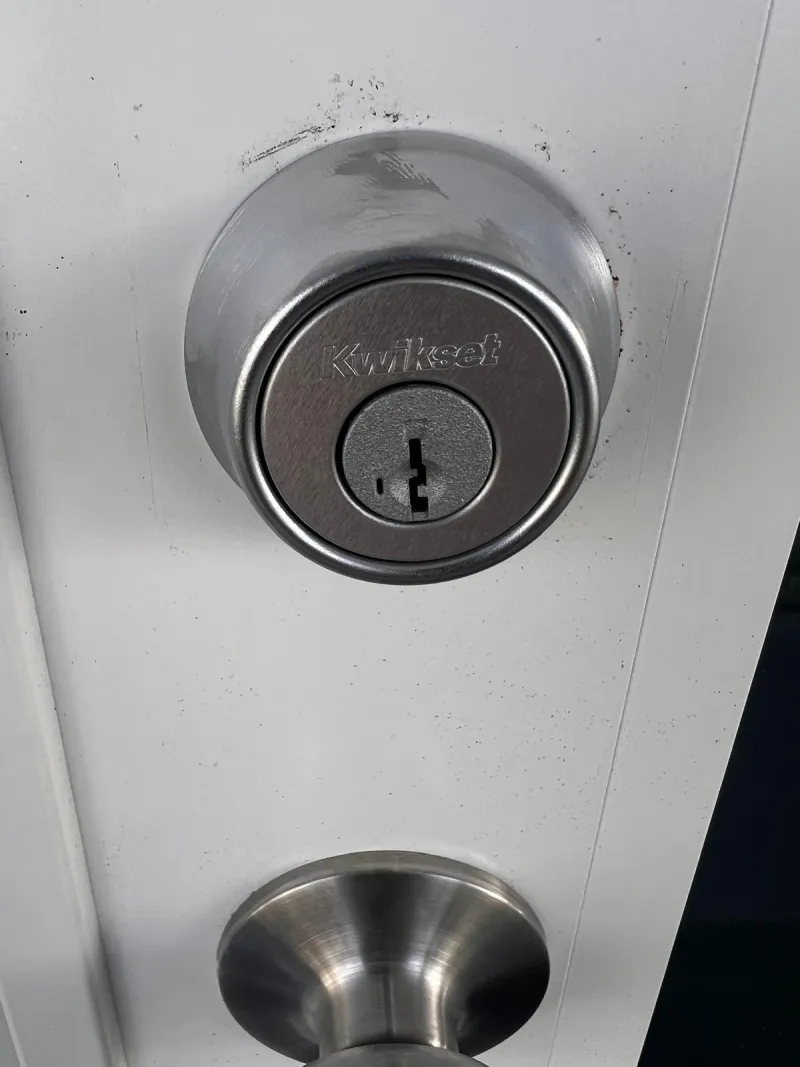
For a broader look at layering your home's security, our Home Security Upgrades page covers how smart locks fit into a complete door and window hardening plan.
Frequently Asked Questions
Are smart locks easier to break into than regular locks?
No, not physically. A Grade 1 smart deadbolt has the same or better physical resistance as a standard Grade 1 deadbolt. The cylinder, bolt, and strike plate are what matter physically. Digital attacks on residential smart locks are rare in practice and generally require proximity and specialized equipment most burglars don't carry.
What happens to my smart lock when the power goes out in Stuart?
Most smart locks run on AA or AAA batteries, so a power outage doesn't affect them directly. What you lose during an outage is remote access via Wi-Fi if your router is down. The keypad and mechanical key backup still work. Always keep fresh batteries in and have the key backup handy before hurricane season hits.
Can someone hack my smart lock through Wi-Fi?
Theoretically yes, practically speaking it's very uncommon. Reputable brands use 128-bit AES encryption and push regular firmware updates. The much bigger real-world risk is a weak or reused access code, or sharing codes with too many people. Use unique codes, change them periodically, and keep your router's firmware updated too.
How long do smart lock batteries last in Florida's heat?
Expect 12-18 months on average in Florida conditions. Heat degrades battery life faster than in cooler climates. Lithium batteries outperform alkaline in heat, so use those. Most smart locks send a low-battery alert to your phone around 20% remaining, which gives you plenty of time to swap them out.
Do smart locks work with my existing door hardware?
Most residential smart locks are designed to replace a standard single-cylinder deadbolt with a 2-3/8" or 2-3/4" backset. If your door has a double-cylinder deadbolt, non-standard spacing, or significant weathering, you may need door prep work first. Stuart Locksmiths can assess your door before you buy anything.
What's the best smart lock brand for Stuart homeowners?
Schlage Encode Plus and Yale Assure Lock 2 are consistently the strongest performers for residential use. Both are Grade 1 ANSI/BHMA certified, use strong encryption, and have reliable app ecosystems. Kwikset Halo is a solid mid-range option. Avoid generic brands without clear ANSI certifications or firmware update histories.
Should I use a smart lock or a keypad lock without Wi-Fi?
If you don't need remote access or activity logs, a standalone keypad deadbolt is actually a great choice. Fewer moving parts digitally means fewer failure points. They're excellent for vacation homes, rental properties, or just homeowners who want convenience without connecting another device to the internet.
Can a locksmith install my smart lock, or should I DIY?
You can DIY if your door prep is perfect and you're comfortable with the process. But if your door frame is even slightly misaligned, or the bore hole needs modification, a professional installation saves you from a lock that won't latch properly or a gap that defeats the whole point of upgrading. Most installs take our team about 45-60 minutes.
How much does smart lock installation cost in Stuart, FL?
Hardware runs $150-$350 for quality Grade 1 smart locks. Professional installation adds $75-$150 depending on door conditions and whether any prep work is needed. Total cost typically lands between $225-$500 for a complete, properly installed setup.
Will a smart lock work if my internet goes down?
Yes. The keypad and any stored access codes work locally on the lock itself, no internet required. What you lose is the smartphone app functionality and remote access. For most homeowners, that's a minor inconvenience. Your door still locks and unlocks exactly as it should.
Can I add a smart lock to my rental property in the Stuart area?
Absolutely, and it's one of the smartest uses for them. You can create unique codes for each tenant or guest, see exactly when the door was accessed, and revoke codes instantly without rekeying. For short-term rentals near Hutchinson Island or Jensen Beach, that's a significant practical advantage over physical keys.
What should I pair with a smart lock for complete door security?
A Grade 1 smart lock paired with a reinforced strike plate, 3-inch security screws, and a solid-core door is genuinely difficult to defeat. Add a door sensor to your alarm system and you've covered both physical and digital bases. Don't skip the strike plate upgrade, it's the single most underestimated security component on most residential doors.
Smart locks are a solid choice for Stuart homeowners who pick the right hardware, install it correctly, and actually use the security features they pay for. The technology works. The weak links are almost always human: weak codes, skipped updates, and poor door prep.
Stuart Locksmiths has helped homeowners from Indiantown to Jupiter get this right. If you want a professional opinion on which lock fits your door, your lifestyle, and your budget, give us a call before you buy anything.
Call Stuart Locksmiths at (772) 362-5731. We'll assess your door, recommend the right lock, and install it the way it's supposed to be done.